Excerpt:
Unable to open your QuickBooks company file? This guide addresses common causes like outdated QuickBooks versions, incorrect file properties, network issues, and file corruption. Learn how to resolve these problems by updating QuickBooks, adjusting file settings, or moving your file to a new location. For persistent issues or immediate help, contact customer support for quick assistance.
 Add As A Preferred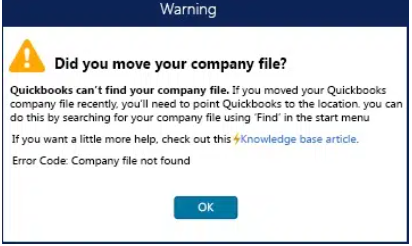
Fix the QuickBooks “Unable to Open This Company File” error by checking the correct file type, renaming damaged .ND and .TLG support files, adjusting folder permissions, or running QuickBooks File Doctor through the Tool Hub to repair data corruption.
If you’re facing frequent company file access or data integrity issues in QuickBooks Desktop, our comprehensive guide on QuickBooks Desktop Company File Errors offers detailed troubleshooting steps and prevention tips.
“QuickBooks is unable to open this company file” is a common file access failure that prevents QuickBooks Desktop from loading your financial records. Your company file stores every invoice, payment, payroll record, and bank transaction in one place — and when QuickBooks cannot read it, the software stops working until the issue is resolved.
This error typically appears with messages such as: “QuickBooks is unable to open this company file” or “The file you specified cannot be opened. Make sure that it is not currently being used by another program or is a read-only file.”
These messages indicate that QuickBooks has detected a problem accessing the company file right at the moment of opening, before any data can be displayed.
If you’re encountering other QuickBooks errors and need a broader range of solutions, visit our complete QuickBooks error codes list for more troubleshooting resources and guides.
QuickBooks “Unable to Open This Company File” error does not appear mid-session. It appears at the very start, when QuickBooks tries to open the file. QuickBooks stops completely rather than partially opening a damaged or locked file because a partial open would cause data loss.
This article provides a diagnostic, risk, and solution framework along with a preventive strategy. The time invested in diagnosing the correct cause saves hours of trial-and-error. Professional businesses must treat QuickBooks file access as a critical financial control activity.
QuickBooks produces several different file-related error messages, and each one points to a different problem. Knowing which error you have determines which solution actually works – starting with the wrong fix wastes time and risks making the problem worse.
6000-series errors such as Error 6000-82 or Error 6000-301 appear when QuickBooks finds a problem with the company file’s internal data or its network configuration files. These errors mean the file exists and QuickBooks can see it, but something prevents it from being read correctly: for example, an extra space in the file name or a damaged .ND network file.
H-series errors such as H202 or H303 appear only in multi-user mode — when multiple computers share the same company file. The Intuit QuickBooks Community confirms these errors mean the server computer holding the file is not communicating properly with the QuickBooks installation on your workstation. If your setup involves shared file access, refer to our QuickBooks multi-user mode errors guide for a complete list of H-series errors and their fixes.
“QuickBooks is unable to open this company file” without a numbered code signals a broader access failure- wrong file type, missing file, locked file, version mismatch, or a permissions problem. This article addresses exactly this error and provides the correct diagnosis path for each cause.
QuickBooks errors create chain reactions when the root cause is left unresolved. A single underlying problem causes one error on day one and multiple errors by day three. Identifying and fixing the original cause prevents this from happening.
| Cause of Unable to Open Error | Possible Triggered Errors |
| Wrong file type opened (.qbb / .qbm) | Error 6000 series – file structure cannot be read by QuickBooks |
| Corrupted company file data | Error 6150, -1006 – damaged company file cannot open at all |
| Multi-user hosting conflict | H202 / H303 – server cannot communicate with workstations |
| Damaged .ND or .TLG companion files | Rebuild failure – data repair tools cannot complete their work |
| Antivirus or firewall blocking access | Firewall communication error – QuickBooks cannot reach the file |
| Corrupted QuickBooks program installation | Unrecoverable error – QuickBooks crashes during startup |
The Root Cause table helps identify the specific trigger before attempting any fix. Match the situation you are experiencing to the correct row. This approach avoids wasted time and prevents applying the wrong solution to a problem it cannot fix.
Start by noting exactly when the error appears. The timing reveals the root cause.
| Possible Causes and QuickFix for Error “QuickBooks is unable to open this company file” | ||
| Error Event | Likely Cause | Recommended Fix |
| Error appears immediately after receiving file from accountant | QuickBooks version mismatch | Update QuickBooks Desktop to matching or newer version |
| Error appears on all computers after power outage | .ND / .TLG companion files damaged | Rename .ND and .TLG files; QuickBooks rebuilds them fresh |
| Error appears only when using multi-user mode | More than one computer hosting the file | Turn off hosting on all workstations; leave it on server only |
| Error appears after installing antivirus software | Security software blocking QuickBooks file access | Add QuickBooks to antivirus and Windows Firewall exceptions |
| Error appears on one workstation only | Insufficient folder permissions on that machine | Grant Full Control to QBDataServiceUser in folder Security settings |
| File opens but immediately freezes or crashes | Saved desktop windows overloading QuickBooks at startup | Hold ALT key while opening to suppress saved desktop reload |
| File has extra space before .qbw in file name | Space in file name breaks QuickBooks file path reading | Right-click file, Rename, delete the space before .qbw extension |
| QuickBooks cannot locate the file in the list | File moved from its original folder location | Use File > Open or Restore and manually browse to file folder |
Understanding which files QuickBooks uses helps prevent data loss during the repair process. Each file type serves a specific purpose. Knowing these purposes explains why creating a backup before any repair is not optional – it is the only protection if a repair goes wrong.
.ND files are called Network Descriptor files that manage the connection between QuickBooks and the company file when multiple computers share it over a network. They store the network address and path information QuickBooks needs to locate the file. Corruption in the .ND file blocks access even when the company file itself is completely undamaged.
.TLG files are called Transaction Log files that record every transaction entered since the last backup. QuickBooks uses this log to recover data if the company file is damaged during a session. A damaged .TLG file prevents the Rebuild Data utility from completing its repair, making the recovery process longer and more difficult.
The Rebuild Data utility rewrites the internal structure of the company file. It reconstructs damaged indexes, repairs list structures, and reorganizes data blocks. This reorganization occasionally exposes hidden corruption that makes the file temporarily unreadable. The backup is the only way to recover the file if Rebuild encounters this situation.
To create a backup before proceeding: open QuickBooks, click the File menu, select Back Up Company, then Create Local Backup. Choose a location on a separate drive: not the same folder as the company file. Click OK and wait for backup completion before attempting any Level 2 or Level 3 solution given below.
Solutions are organized by skill level, risk level, and success probability. This tiered approach protects your data while maximizing repair chances. Start with Level 1 solutions and move to higher tiers only if lower-tier solutions fail.
| Level 1 – Beginner Safe Fixes |
These solutions require no technical knowledge. The risk of data loss is minimal. Anyone can perform these steps safely. Begin here before attempting any network or system-level changes.
| Skill Level | Risk Level | Success Probability | Approximate Time |
| Beginner | None | 35% – Resolves immediately if wrong file type is the cause | 5 minutes |
| Risk ExplanationThis solution modifies nothing. It only asks you to look at the file name extension. No files are changed, moved, or deleted. | Solution ExplanationQuickBooks company files must end in .qbw. Backup files (.qbb) and portable files (.qbm) cannot be opened using the standard Open command – they must be restored. Trying to open a .qbb or .qbm file as a company file produces this error every single time. The Intuit QuickBooks Community confirms this is one of the most common causes of the error. | ||
Steps to Implement Solution 1.1:
1. Press the Windows key on your keyboard. Type File Explorer in the search box and press Enter. File Explorer is the program that shows all your files and folders – it looks like a folder icon on your taskbar.
2. Navigate to the folder where your company file is saved. The default location QuickBooks uses is: C:\Users\Public\Public Documents\Intuit\QuickBooks\Company Files. Open this folder to see your files.
3. Look at the end of your file’s name – the part after the last dot. A company file ends in .qbw, for example: MyCompany.qbw. If Windows is hiding extensions, click the View menu in File Explorer and check the box next to “File name extensions” to show them.
4. If the file ends in .qbb, it is a backup file. If it ends in .qbm, it is a portable file. Both require a different process to open. Open QuickBooks. Click File in the top menu. Select Open or Restore Company. Choose Restore a Backup Copy for .qbb files, or Open a Portable Company File for .qbm files, then follow the on-screen steps.
| Skill Level | Risk Level | Success Probability | Approximate Time |
| Beginner | Low | 40% – Resolves version mismatch and patched program bugs | 15–30 minutes |
| Risk ExplanationQuickBooks updates do not modify company files. The update process replaces only program files. Intuit tests updates extensively before release. Always maintain a current backup before updating as a standard practice. | Solution ExplanationA company file saved in a newer version of QuickBooks cannot be opened in an older version. The Intuit QuickBooks Community confirms the message: “The company file that you are trying to open was created with a newer version of QuickBooks.” Updating resolves this mismatch. Updates also patch known bugs that cause file access failures. | ||
Steps to Implement Solution 1.2:
1. Open QuickBooks Desktop on your computer. Do not open the company file yet – let QuickBooks load to the main No Company Open screen first. Press F2 to open the Product Information window. Note your current version and release number. Close the Product Information window.
2. Click Help in the top menu bar. Select Update QuickBooks Desktop from the dropdown menu. A new window opens. Click the Update Now tab at the top. Check the box next to Reset Update – this clears any stuck or incomplete update downloads from previous attempts.
3. Click the Get Updates button. QuickBooks downloads all available updates. Do not close QuickBooks during the download – closing it during this step stops the download. A progress bar shows download status.
4. When the download finishes, close QuickBooks completely. A prompt asks if you want to install the updates – click Yes. The installation takes several minutes. Your computer may restart during installation. After the update installs, open QuickBooks and try opening your company file.
| Skill Level | Risk Level | Success Probability | Approximate Time |
| Beginner | Low | 60% – Resolves freeze and crash-on-open caused by saved window overload | 5–10 minutes |
| Risk ExplanationHolding the ALT key changes only which windows QuickBooks loads at startup. It does not modify any files. The worst outcome is the file still does not open, with no data changed. | Solution ExplanationQuickBooks saves all open windows – reports, registers, transaction lists – and reloads them automatically the next time a company file opens. Multiple support sources confirm that when saved windows include large reports or many open records, QuickBooks freezes trying to reload all of them simultaneously. Holding ALT skips that reload and opens the file cleanly. | ||
Steps to Implement Solution 1.3:
1. Open QuickBooks Desktop. Do not double-click the company file directly from File Explorer. Instead, let QuickBooks open to the No Company Open window – the screen that shows a list of recent company files.
2. Click once on your company file name in the list to highlight it. Now hold down the ALT key on your keyboard. While holding ALT, click the Open button. Keep holding the ALT key – do not release it – until the company file finishes loading and the main QuickBooks screen appears.
3. If QuickBooks asks for your password, release the ALT key, type your password, then hold ALT again and click OK. Keep holding until the home screen appears. If the file opens successfully, proceed to turn off the desktop permanently.
4. Click Edit in the top menu. Select Preferences. Click Desktop View on the left side of the Preferences window. Select Don’t save the desktop option. Click OK. The next time you open QuickBooks, it will not try to reload all previous windows automatically.
| Level 2 – Intermediate Fixes |
These solutions modify file configurations or system settings. Basic computer familiarity is helpful. Risk increases because these operations affect file structures. Create a full backup before attempting any Level 2 solution.
| Skill Level | Risk Level | Success Probability | Approximate Time |
| Intermediate | Low to Moderate | 85% – One of the highest-success fixes for this error | 15–20 minutes |
| Risk ExplanationRenaming these files does not delete data. QuickBooks creates new replacement files automatically. The renamed .OLD files remain as a backup. Follow naming instructions exactly – a wrong rename may prevent QuickBooks from finding the company file. | Solution ExplanationThe .ND file stores the network address and path QuickBooks needs to locate the company file. The .TLG file records transactions for recovery. Both become damaged during unexpected shutdowns or power outages. Multiple Intuit Community sources confirm renaming these files forces QuickBooks to create fresh, undamaged versions – resolving the access failure immediately. | ||
Steps to Implement Solution 2.1:
1. Close QuickBooks on every computer that uses it. Make sure no one is inside QuickBooks anywhere on the network. A QuickBooks session left open on any computer will prevent the new .ND file from being created correctly.
2. Open File Explorer on the server – the computer where the company file is physically stored. Press the Windows key + E to open File Explorer. Navigate to the company file folder. The default folder is: C:\Users\Public\Public Documents\Intuit\QuickBooks\Company Files.
3. Look for a file with the same name as your company file but ending in .ND – for example, MyCompany.qbw.ND. Right-click that file. Select Rename. Add .OLD to the very end of the name so it becomes MyCompany.qbw.ND.OLD. Press Enter to save the new name.
4. Now find the file ending in .TLG – for example, MyCompany.qbw.TLG. Right-click it. Select Rename. Add .OLD to the end so it becomes MyCompany.qbw.TLG.OLD. Press Enter.
5. Open QuickBooks on the server and try to open the company file. QuickBooks automatically creates new, clean .ND and .TLG files in that same folder. Do not delete the .OLD files until you confirm the company file opens correctly on all computers in the office.
Solution 2.2: Fix Multi-User Hosting Settings
| Skill Level | Risk Level | Success Probability | Approximate Time |
| Intermediate | Low | 70% – Required fix when error affects only networked workstations | 15–20 minutes |
| Risk ExplanationTurning off hosting on workstations does not delete or move any data. The company file stays on the server. The only risk is accidentally turning off hosting on the server – verify the server setting after making workstation changes. | Solution Explanation QuickBooks multi-user mode requires exactly one computer – the server – to host the company file. The Intuit QuickBooks Community confirms that when two or more computers both have hosting turned on, QuickBooks cannot coordinate between them. The file stays locked and unreadable. Turning off hosting on all workstations while leaving it on only the server resolves the conflict immediately. | ||
Steps to Implement Solution 2.2:
1. Start with your workstations – the computers people use to access QuickBooks, not the server where the file is stored. Open QuickBooks on the first workstation. Do not open the company file yet.
2. Click File in the top menu. Hover over Utilities to see a submenu appear. Look at the option shown. If it says Host Multi-User Access, hosting is already correctly off on this computer – do not click anything. Close QuickBooks and move to the next workstation.
3. If the submenu says Stop Hosting Multi-User Access, hosting is incorrectly turned on. Click Stop Hosting Multi-User Access. A confirmation box appears – click Yes. Repeat this process on every workstation in your office before touching the server.
4. Go to the server computer – the one that physically holds the company file. Open QuickBooks. Click File > Utilities. Confirm that Stop Hosting Multi-User Access appears. This means the server is correctly set as the active host. If it shows Host Multi-User Access instead, click it to turn hosting on.
5. Test file access from a workstation after completing all changes. The file should open without the error. If the error appears on only one workstation after this fix, that workstation likely has a permission issue – proceed to Solution 3.1.
Solution 2.3: Remove Space from Company File Name
| Skill Level | Risk Level | Success Probability | Approximate Time |
| Intermediate | Low | 65% – Resolves immediately when extra space is the confirmed cause | 10 minutes |
| Risk ExplanationRenaming a file changes only its name – no data inside the file is affected. The risk is accidentally deleting part of the actual file name. Rename carefully and confirm the new name is correct before pressing Enter. | Solution ExplanationThe Intuit QuickBooks Community documents this cause directly: an extra space after the company file name, before the .qbw extension, breaks how QuickBooks reads the file path. QuickBooks cannot find a file at the path it recorded because the space creates a mismatch. Removing the space corrects the path and allows the file to open. | ||
Steps to Implement Solution 2.3:
1. Close QuickBooks completely on all computers. Open File Explorer and navigate to the folder containing the company file: C:\Users\Public\Public Documents\Intuit\QuickBooks\Company Files.
2. Look carefully at the company file name. If Windows is hiding extensions, click the View menu in File Explorer and check File name extensions to show the full name. Look for any space between the file name and the .qbw extension – for example, MyCompany .qbw instead of MyCompany.qbw.
3. Right-click the company file. Select Rename. The file name becomes editable. Click just before the period in .qbw and look for a space character. If a space is present, press the Backspace key to delete it. The name should read with no space – like MyCompany.qbw.
4. Press Enter to save the corrected name. Open QuickBooks and try to open the company file. The corrected file name allows QuickBooks to locate the file using the correct path.
Solution 2.4: Uncheck Compress and Encrypt on the Company File Folder
| Skill Level | Risk Level | Success Probability | Approximate Time |
| Intermediate | Low | 55% – Resolves immediately when compression is the confirmed cause | 10 minutes |
| Risk ExplanationUnchecking compression expands the folder size on disk but does not change any data inside the files. Unchecking encryption makes files readable by other users on that computer – verify this is acceptable for your security policy before proceeding. | Solution ExplanationWindows can compress or encrypt folders to save disk space or protect data. The Intuit QuickBooks Community confirms that QuickBooks cannot read through the Windows compression layer – the file appears to exist but the raw data QuickBooks needs is inaccessible. Similarly, encryption locks access to specific user credentials that QuickBooks does not match. Removing both settings restores normal file access. | ||
Steps to Implement Solution 2.4:
1. Open File Explorer and navigate to the folder containing your company file. Right-click the company file itself – the one ending in .qbw. Select Properties from the menu that appears.
2. In the Properties window, click the Advanced button near the bottom of the General tab. A small window called Advanced Attributes opens. Look for two checkboxes: Compress contents to save disk space and Encrypt contents to secure data.
3. If either checkbox has a checkmark in it, click the checkmark to remove it. Click OK to close the Advanced Attributes window. Click Apply in the Properties window.
4. A prompt may ask whether to apply changes to this file only or to all files in the folder. Select This folder, subfolders and files if prompted. Click OK. Retry opening the company file in QuickBooks.
| Level 3 – Advanced / System-Level Repair |
These solutions require more technical steps and carry higher risk. System-level changes can affect how QuickBooks interacts with Windows. Data backup is mandatory before attempting any Level 3 solution. Contact professional support if you are uncomfortable with these procedures.
| Skill Level | Risk Level | Success Probability | Approximate Time |
| Advanced | Moderate | 70% – Resolves one-computer-only access failures caused by permissions | 20–30 minutes |
| Risk ExplanationGranting Full Control to a user account gives that account complete access to all files in the folder – not just the company file. Review your organization’s security policy before granting broad permissions. Restrict access to authorized accounts only. | Solution ExplanationWindows permissions control which user accounts can read, write, or modify files. The Intuit QuickBooks Community confirms insufficient permissions as a direct cause of the “file cannot be opened” error. QuickBooks requires both read and write access to the company file because it writes data to the file at the moment of opening – logging the session and updating internal indexes. A user with only read access cannot satisfy this requirement. | ||
Steps to Implement Solution 3.1:
1. On the server – the computer that physically holds the company file – open File Explorer. Navigate to the folder containing the company file. Right-click the folder itself, not the file inside it. Select Properties.
2. Click the Security tab at the top of the Properties window. The Security tab shows a list of user accounts and groups that currently have permissions to this folder. Click the Edit button below the list. A new window opens for editing permissions.
3. Click the Add button. In the text box that appears, type QBDataServiceUserXX – replace XX with your QuickBooks version year number. For QuickBooks 2024, type QBDataServiceUser29. For QuickBooks 2023, type QBDataServiceUser28. Click Check Names to confirm Windows finds that account. Click OK.
4. Select the QBDataServiceUser account in the permissions list. In the permissions section below, check the box under Allow next to Full Control. Click Apply then OK to save the changes. Restart the server computer after making these changes. Test file access from workstations after the server restarts.
Solution 3.2: Run QuickBooks File Doctor
| Skill Level | Risk Level | Success Probability | Approximate Time |
| Advanced | Low to Moderate | 75% – Recommended for corruption and network configuration problems | 15–45 minutes (depends on file size) |
| Risk ExplanationFile Doctor scans and repairs the company file. In rare cases, repair reveals deeper corruption that temporarily makes the file unreadable. A current backup is the only protection against this outcome. Always back up before running File Doctor on a suspected corrupted file. | Solution ExplanationQuickBooks File Doctor is a diagnostic and repair tool built by Intuit specifically for company file damage and network configuration problems. Intuit’s official support documentation lists File Doctor as the recommended tool when basic solutions have not worked. It scans for internal corruption – damage to the database structure – and repairs what it finds automatically. It also scans and corrects network settings simultaneously. | ||
Steps to Implement Solution 3.2:
1. Download QuickBooks Tool Hub from Intuit’s official website. Search “QuickBooks Tool Hub download Intuit” in your browser to find the current official download page. Save the downloaded file – QuickBooksToolHub.exe – to your desktop so you can locate it easily.
2. Double-click the downloaded file to run the installer. Follow the installation prompts. Accept the terms and conditions. After installation completes, double-click the QuickBooks Tool Hub icon on your desktop to open it.
3. Click the Company File Issues tab on the left side of the Tool Hub window. Click Run QuickBooks File Doctor. File Doctor opens in a separate window. Click the dropdown arrow and select your company file from the list. If your file does not appear, click Browse, navigate to the company file folder, select your .qbw file, and click Open.
4. Select the option Check your file and network – this runs both the file corruption scan and the network settings scan simultaneously. Click Continue. File Doctor asks for your QuickBooks Admin password. This is the password for the Admin account inside QuickBooks itself, not your Windows login password.
5. Type the Admin password and click Next. The scan runs for 5 to 45 minutes depending on company file size. File Doctor shows a results screen when it finishes. If it found and repaired problems, open QuickBooks and try the company file. If File Doctor reports it cannot repair the file, the damage requires professional data recovery.
| Skill Level | Risk Level | Success Probability | Approximate Time |
| Advanced | Low | 65% – Required fix when antivirus or firewall is the confirmed blocker | 20–30 minutes |
| Risk ExplanationAdding QuickBooks to exceptions does not disable security software for other programs. It creates a specific rule that allows only QuickBooks file access through. The rest of your security protection remains fully active. | Solution ExplanationAntivirus and firewall programs monitor all rapid file access and can incorrectly block QuickBooks. The Intuit QuickBooks Community confirms the specific message: “Cannot communicate with the company file due to a firewall” is a documented error caused by security software. Adding QuickBooks to the exceptions list tells the security software to allow that specific file access without disabling protection for everything else on the computer. | ||
Steps to Implement Solution 3.3:
1. Open your antivirus or security software. Every antivirus program has a different interface, but all contain a section called Exceptions, Exclusions, or Whitelist. Look for that section in the settings or protection menu of your antivirus.
2. Add the entire QuickBooks program folder to the exceptions list. The default QuickBooks installation folder is: C:\Program Files\Intuit\QuickBooks [Year] – replace [Year] with your version, for example QuickBooks 2024. Also add the company file folder: C:\Users\Public\Public Documents\Intuit\QuickBooks\Company Files.
3. For Windows Defender Firewall specifically: press the Windows key and type Windows Defender Firewall. Open it. Click Allow an app or feature through Windows Defender Firewall on the left side. Click Change Settings. Scroll the list to find QuickBooks Desktop.
4. Check both the Private and Public boxes next to QuickBooks Desktop. If QuickBooks is not in the list, click Allow another app, browse to C:\Program Files\Intuit\QuickBooks 20XX, and add QBW32.exe manually. Click OK to save all firewall settings. Restart the computer and try opening the company file.
Some situations require professional assistance before attempting further repairs. Recognizing these situations early prevents permanent data loss. Stop self-troubleshooting immediately in the following cases.
• File Doctor Cannot Repair: Stop if QuickBooks File Doctor reports it cannot repair the file. Unrecoverable corruption requires professional QuickBooks auto data recovery tool that go beyond what Intuit’s built-in utilities can address. Continuing DIY attempts risks making the file permanently unusable.
• Repeated Rebuild Failures: Stop if Verify Data reports extensive problems and Rebuild Data fails repeatedly. Messages like “your data has lost integrity” after three Rebuild cycles indicate damage that requires specialist intervention.
• Drive Failure and Missing File: Stop if the company file cannot be located at all and the drive it was stored on has failed. Do not write new data to that drive – doing so can overwrite the deleted file and make recovery by data recovery professionals impossible.
• All Solutions Exhausted: Stop if every solution across all three levels has been attempted and the error still appears on every computer. Deeper infrastructure problems – failing hard drives, corrupted Windows system files – require IT professional diagnosis.
Preventing this error requires consistent maintenance habits. Most occurrences stem from preventable causes- wrong file storage location, improper shutdown, outdated software, or unmanaged backup routines. These strategies eliminate the most common causes before they create problems.
Create backups daily before processing transactions. Intuit recommends using File > Back Up Company > Create Local Backup. Store backups in three locations: local hard drive, external drive, and cloud storage. A backup saved in the same folder as the company file provides no protection if that folder is lost.
Test backup restoration quarterly. A backup that cannot be restored provides no protection. Open a test backup in QuickBooks and verify your most recent transactions are present. Faulty backups discovered during testing can be corrected – faulty backups discovered during a real emergency cannot.
The Intuit QuickBooks Community specifically documents this: company files stored in folders synced to services such as Google Drive or Dropbox cause access failures because the sync service attempts to upload the file while QuickBooks is actively writing to it. These two simultaneous operations conflict and corrupt the file. Store company files only in a local folder on the server hard drive.
Double-clicking a company file in File Explorer bypasses QuickBooks’s internal file management process and can produce access errors. Always open QuickBooks first, then use File > Open or Restore Company to navigate to the file. This ensures QuickBooks controls the file-opening process from beginning to end.
QuickBooks writes data to both the company file and the .TLG log file during the close process. Shutting down the computer while QuickBooks is still running, or ending QuickBooks through Task Manager, interrupts that write process and damages the companion files. Always close through File > Close Company before shutting down the computer.
Intuit releases updates that fix compatibility issues, known bugs, and stability problems. Running an outdated version increases the risk of file access errors – especially when company files have been updated by other users on newer versions. Check for updates monthly through Help > Update QuickBooks Desktop and install available releases promptly.
Related QuickBooks Errors
If you are experiencing company file access issues beyond this error, these related errors may also be affecting your QuickBooks Desktop:
| Error | Description |
|---|---|
| QuickBooks Desktop Error Code 6010 | Company file fails to open due to network or permission issues |
| QuickBooks Desktop Error Code 6143 | File access blocked due to damaged or locked company file |
| QuickBooks Desktop Unable to Commit File Write Operation to Disk | Data cannot be saved due to disk write failure or file corruption |
QuickBooks is unable to open this company file when something stands between the software and the data it needs – a wrong file type, a version mismatch, damaged companion files, incorrect hosting settings, blocked permissions, security software interference, or file name formatting issues.
The correct approach is to identify which scenario matches your situation using the root cause table, then apply the targeted solution at the appropriate level. Checking the file type and updating QuickBooks costs nothing and takes five minutes. Renaming .ND and .TLG files resolves the majority of cases in under twenty minutes.
File Doctor handles corruption automatically. Folder permissions and firewall exceptions resolve access blocks affecting specific users or computers.
If you’ve followed all the steps — from renaming .ND/.TLG files and updating QuickBooks to fixing permissions and running File Doctor — yet you’re still staring at the “QuickBooks is unable to open this company file” error, you’re not alone. This frustrating roadblock can bring your entire day to a halt because without access to your company file, invoices, payroll, and reports simply stop working.
For expert guidance and additional troubleshooting options that go beyond the standard fixes, visit our QuickBooks support and troubleshooting page where you’ll find more dedicated solutions and direct assistance for company file problems.