Add As A Preferred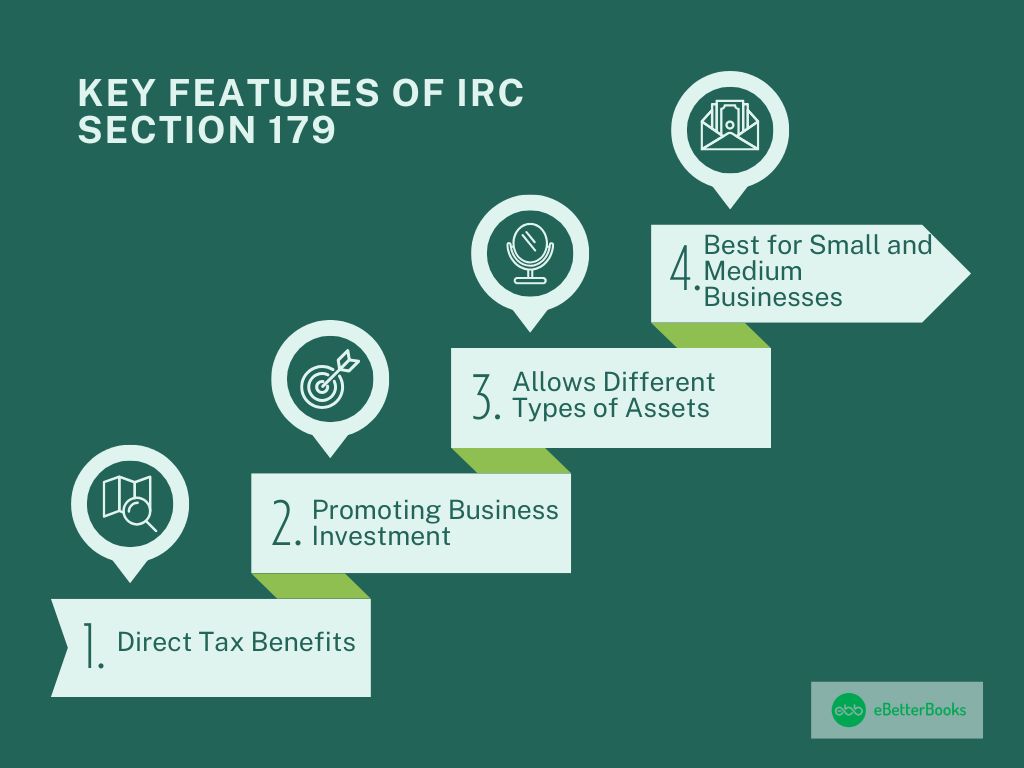
Tax deductions help organizations mitigate their expenditures and reinvest in their growth. Section 179 of the Internal Revenue Code is among the most valuable tax credits available to U.S. businesses. It allows businesses to deduct the entire purchase price of qualified equipment and assets within the same year they are placed in service, avoiding depreciation over multiple years.
Section 179 aims to encourage businesses, particularly small and medium-sized enterprises, to invest in equipment, technology, and other assets required for operations. Accelerating deductions reduces taxable income and increases cash flow.
The limit will be set at $1,250,000 in 2025, and the phase-out threshold will begin at $3,130,000. Small businesses that exceed $4,380,000 will not receive the full deduction. This makes Section 179 very useful, especially for businesses that plan to make huge investments.
The article will describe how Section 179 functions, who qualifies for it, its limits, and its restrictions. We’ll also examine how it can help small and large businesses and why several experts consider it a game-changer for financial planning.
Section 179 is a tax deduction that enables taxpayers to reduce their taxable income for a business by deducting the full cost of qualifying equipment and/or assets purchased during the year they are put into service instead of depreciating the cost over many years.
Historically, businessmen have depreciated assets and received progressive claims over several years. However, under Section 179, firms can claim the full expense of eligible purchases by immediately expensing them, thereby reducing their taxable income for the same year.
Originally developed to spur investment in businesses, Section 179 is vital for all businesses. It allows SMEs to reinvest their funds into operations instead of waiting many years to recoup them through depreciation.
This is very different from bonus depreciation, which allows businesses to deduct a certain percentage of the cost of the assets over time. Although these incentives both help reduce tax liability, Section 179 offers more immediate benefits.
The IRS annually caps the amount of how much businesses can qualify for under Section 179.
For 2025, the deduction limits are as follows:
Section 179 is a vital tool for businesses, especially small and mid-sized companies, since it provides instant financial relief and encourages investment.
Key Benefits:
Certain criteria indicate what qualifies you for Section 179.
Although Section 179 offers businesses several tax advantages, various restrictions and limits apply in certain circumstances.
It is very important to understand how to apply Section 179 to optimize tax savings properly.
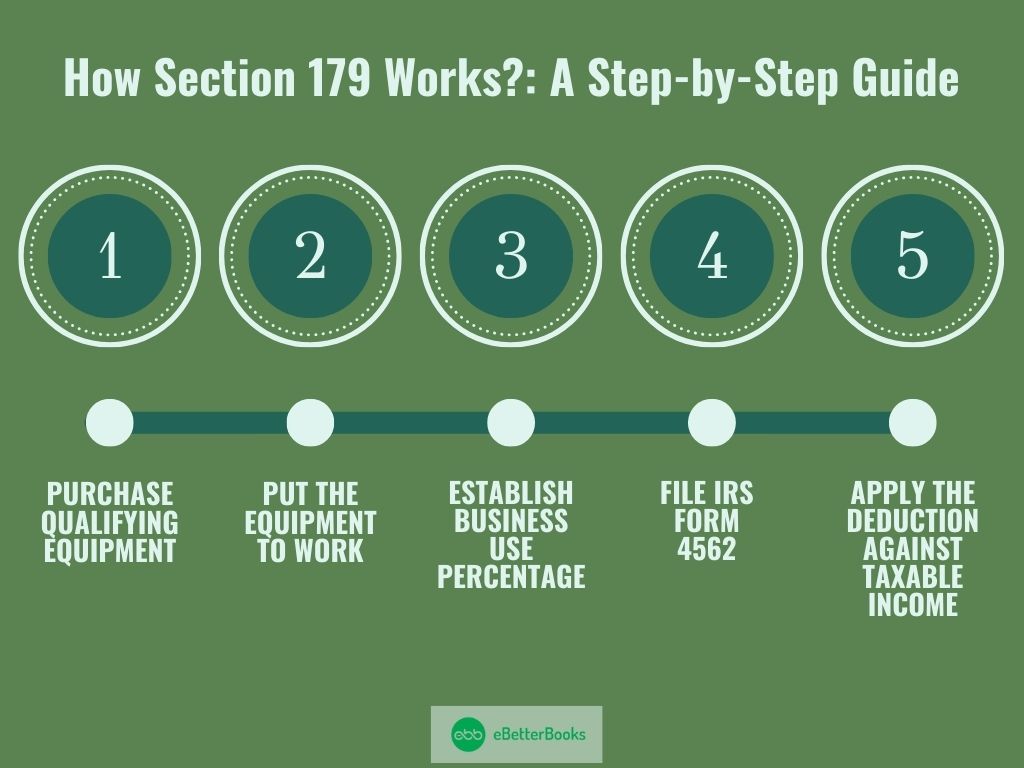
Here is a step-by-step guide for taking the Section 179 deduction:
The equipment assets must be new or secondhand but qualify as new to your business. They must be categorized as qualifying property under IRS standards.
Acquiring an asset doesn’t qualify it as an expense; it must be put into service for business during the same tax year.
Example: A company acquired machinery in November 2025, but its usage started in January 2026. They can’t write it off for 2025 since the machinery was not placed into service until 2026.
The asset has to be in service for business purposes for us for about 50%. Whatever portion is used personally is not deducted. Only the business-use portion is eligible for deduction under Section 179.
Example: Assume that a truck is used 80% for business and 20% for personal use. The deduction in Section 179 is limited to business usage only or 80% of the truck’s basis.
A business must include Form 4562 (Depreciation and Amortization) with the tax return to claim the deduction.
The amount of the deduction cannot exceed the total business income. If your taxable income is less than Section 179 deductions, you may not have the benefit of taking such deductions.
By realizing the Section 179 tax benefit as a transaction on its merit, some businesses make costly errors in claiming the deduction.
Simply buying the equipment isn’t enough; one must also use it for business before the end of the year.
Solution: Ensure the asset is in operation before the 31st of December to deduce.
The deduction is still the lower of Section 179 or one’s net business income; hence, if the taxable income is below a particular minimum limit, the deduction would be zero.
Solution: If there is low or no taxable business income, consider spreading the deduction over several years.
If an asset is utilized for both business and personal purposes, only the percentage related to business ensuing from such use is deductible. For example, only 60% of the cost of the vehicle could be deducted if it was used 60% of the time for business purposes.
Solution: Maintain detailed usage logs to support deductions.
Businesses that invest over $3,130,000 in assets will have their deduction reduced gradually.
Solution: To remain underneath the limit, purchase items in multiple years.
For Section 179, businesses must file IRS Form 4562 at least on their income tax return.
Solution: Work with a tax professional to ensure the form is filed correctly.
Businesses can avoid the above mistakes by maximizing their tax savings while following IRS rules.
Section 179 is a very strong tax incentive that allows businesses to deduct the full cost of qualifying equipment and assets in the year they are purchased and placed into service. The deduction limit for 2025 is $1,250,000, and the phase-out starts at $3,130,000, making this tax provision particularly useful for small and medium-sized businesses looking to improve cash flow and reinvest in growth.
Educating yourself more deeply about Section 179 can help business enterprises reduce their tax burden by ensuring eligibility and keeping expenses under a certain limit. Take advantage of the deduction and make informed purchasing decisions to derive the maximum benefit.