Add As A Preferred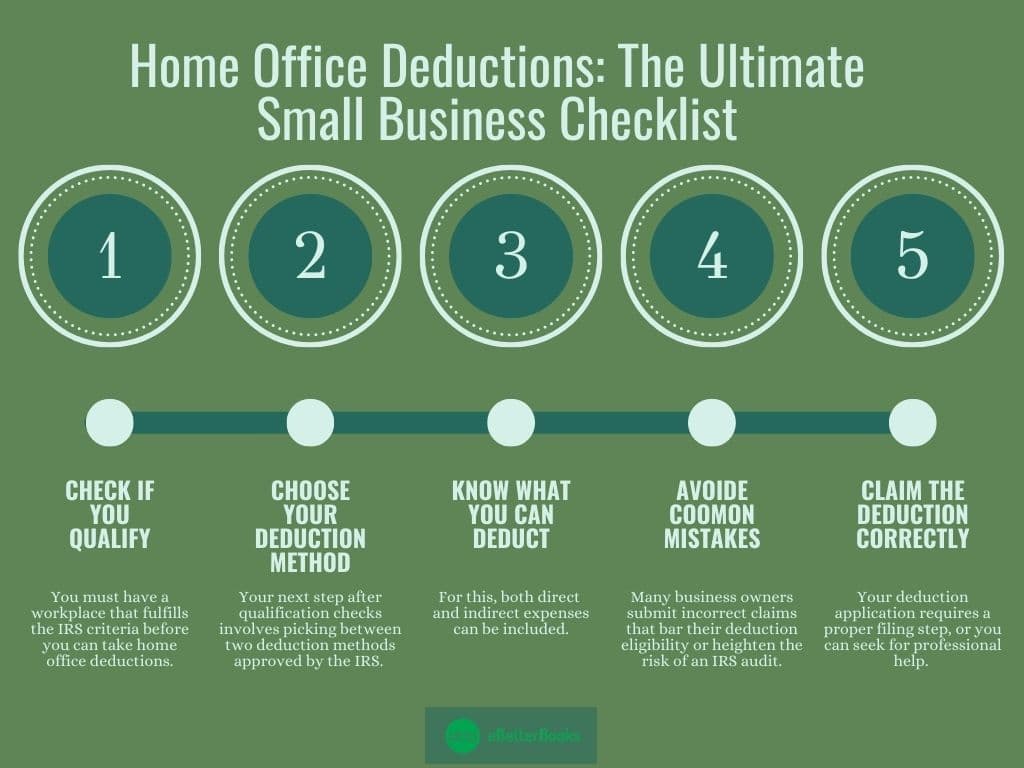
For business Owners and Freelancers who use their home as an office, this deduction will be an important one. The Home Office Tax Deductions for home usage remain hidden from most, yet they have established strong tax-saving potential. Working from home enables you to receive tax deductions for portions of your rent or mortgage payments along with your utility bills and internet fees, which produces substantial yearly savings.
Multiple business owners are either confused about how to qualify for this deduction or fear possible IRS scrutiny. The good news? By following all rules and documenting your expenses properly, the home office deduction offers a secure method to reduce your taxable income.
The home office tax deduction is an opportunity for eligible taxpayers to lower their taxable income by claiming the specific home spending costs if they conduct business exclusively in dedicated residence areas. Business Owners who deduct their qualified home business expenses receive decreased taxable income, resulting in reduced tax burden.
The deduction applies to both homeowners and renters and can cover expenses like:
To claim this deduction, the IRS requires taxpayers to demonstrate that their business activity occurs exclusively and quite frequently in the designated space. Homeworkers’ W-2 status prohibits them from deducting these costs unless they run an outside business.
There are two ways to calculate the deduction:
Business owners who track expenses correctly while fulfilling IRS requirements can substantially reduce their taxes through this deduction.
This manual covers essential details, including IRS eligibility requirements, calculation procedures, frequent errors, and proper deduction filing procedures. At the conclusion, users will understand both cost-saving optimization and complete IRS compliance.
You must have a workplace that fulfills the IRS criteria before you can take home office deductions.
The Home Office Must be Used Exclusively for Business
When taking the space deduction, you must maintain separate business-only use for that area. Tax agents enforce strict rules regarding this requirement; thus, taxpayers must exercise extreme caution.
Do Qualifies:
Does Not Qualify:
Tip: When your work area shares space with other functions, use physical dividers made from bookshelves and curtains to separate them clearly.
The Home Office Must be Your Principle Place of Business
When you combine third-party office space with home office use, you can still obtain this deduction if your residence is your main work location.
This includes:
Example: A freelance graphic designer running their business primarily from home for 80% while conducting client meetings in coffee shops maintains eligibility.
Your next step after qualification checks involves picking between two deduction methods approved by the IRS.
There are two IRS-approved methods:
Simplified Method (Best for Small Workspaces and Simplicity)
Regular / Actual Expense Method (Best for Maximizing Deductions)
Example
If your home is 2,000 sq. ft. and your office is 200 sq. ft., then:
You can deduct 10% of all home costs since 200 sq. ft. out of 2000 sq. ft. makes up the percentage.
For this, both direct and indirect expenses can be included:
These are 100% business-related costs:
Indirect Expenses (Partially Deductible)
These apply to your whole home, but a percentage is deductible:
Depreciation (For Homeowners Only)
Homeowners can recover costs through depreciation by allocating sections of their residence for business operations.
Many business owners submit incorrect claims that bar their deduction eligibility or heighten the risk of an IRS audit.
Common mistakes include:
Tip: For automatic expense tracking, try any software like the QuickBooks Self-Employed application.
Your deduction application requires a proper filing step, which can be done as follows:
How to File the Deduction:
There are two methods through which the deduction can be filled:
When to Seek Professional Help?
Accurate records of workspace details, receipts, and floor plans are essential. This documentation helps defend your claim during tax agency audits. When facing uncertainty, you should obtain tax professional advice.
Final Thought
When executed properly, the home office tax deduction can help you save substantial revenue each year. Maximizing your tax deduction and protecting yourself from audits depends on understanding and adhering to IRS guidelines for both the simplified and actual expense methods while maintaining proper documentation.
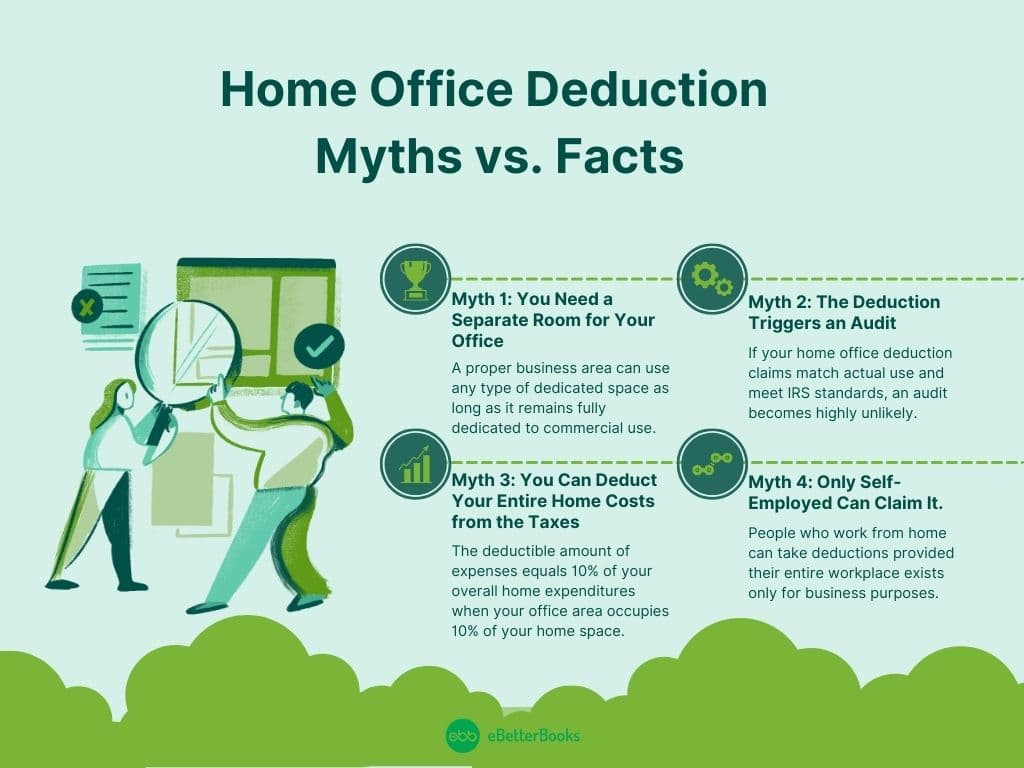
Myth 1: You Need a Separate Room for Your Office
Myth 2: The Deduction Triggers an Audit
Myth 3: You can Deduct Your Entire Home Costs from Ths Deduction
Myth 4: Only Self-Employed Can Claim It
Conclusion
Business operators can substantially decrease their taxable expenses through the powerful deduction available for home offices. Your ability to claim this deduction depends on meeting IRS workspace requirements together with proper deduction selection and maintaining accurate records while avoiding IRS trigger points.
Proper documentation and compliance are key requirements for both simplified and actual expense methods. A well-designed approach can decrease your tax burden while maximizing profitability, allowing you to redirect tax savings into your business operations.