Add As A Preferred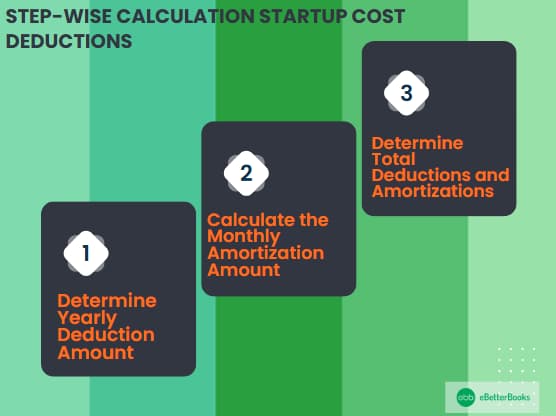
Advertising expenses, legal fees, market research costs, meeting costs, partnership fees, etc. are deductible according to the IRS for Startups. Running a small business holds both exciting potentialities and demanding situations yet effective financial management represents the essential pathway to achievement.
A fundamental component of startup cost management depends on identifying deductible expenses that are allowed by the laws. Tax deductions help small business owners save money because they decrease the size of taxable income which ultimately reduces the amount owners need to pay in taxes.
Every new business must pay startup costs that emerge before operational commencement. Startup expenses including office tools alongside marketing costs and legal expenses together with registration fees and staff wages serve as crucial financial prerequisites to establish new businesses.
All startup costs that are Tax deductible fall under two categories:
Further, these include:
Further, these include:
Organizational cost and Business cost both follow the same rule, you can deduct up to $5,000 from each cost individually, provided that the overall total startup cost does not exceed the total limit of $50,000. All the extra costs can be distributed across multiple years by following the process of amortization.
The deductible amount defines what expenses will be amortized when all remaining costs surpass this threshold. The amortization process stretches these extra expenses across 15 years (180 months) so you can decrease taxable income sequentially. The distribution of deductible costs across multiple times helps new businesses manage their tax expenses better due to poor cash flow in the first few years. Tracking startup costs will help you achieve maximum deductions which produces a beneficial financial outcome.
According to IRS rules, not all the expenses incurred in starting up a business are eligible for deduction or amortization, therefore some deductions are not allowed by IRS.
These expenses can be as follows:
A new business owner typically faces multiple costs that need to be spread across multiple years for tax purposes. Startup business costs become more manageable over time by spreading their accelerated depreciation across fifteen consecutive years through the amortization process. The method allows you to prevent significant tax hits before achieving substantial business growth.
Using amortization enables business owners to deduct specific amounts from their startup costs throughout multiple tax years. Through amortization instead of standard deduction you can spread costs across successive years rather than immediately claiming the full expense amount. For each subsequent year within the specific timeframe, you perform fixed deductions at identical amounts until you reach period number 15.
For example, let’s look at how this works:
The new venture “Brewed Awakening” is opened by Sarah. She spends:
$5,000 on coffee machines, grinders, and other equipment.
The advertising expenses for promoting the opening amounted to $6,000.
Her total startup costs are $11,000.
Because the total startup costs are less than $50,000, Sarah can:
The $5,000 spent on equipment during the first year qualifies for an immediate deduction.
The advertising expenses totalling $6,000 should be stopped across 15 years for tax deductions. She can experience tax benefits of $400 per year through advertising amortization by spreading her $6,000 marketing cost across 15 years.
The $5,000 equipment expense gives Sarah a quick tax write-off but she also receives yearly tax reductions worth $400 for 15 years for marketing expenses.
Through the application of amortization, you can reduce the financial load by spreading out costs particularly useful for balancing first-year expenses with quick revenue generation.
Sole proprietors must file Schedule C with Form 1040 to claim startup cost deductions while partnerships allocate information through Schedule K-1.
Startup expenditures lead to deductions while other costs need amortization which both take place on your business’s tax return filings. Your business structure determines which form you must complete.
After your business’s first year, you should use Form 4562 to obtain startup cost amortization benefits. The form enables you to distribute your costs across various periods.
The form selection for your business should match its structure because the timing of your taxes depends on your selection.
Determine all costs that were necessary to establish your new business. A financial management system helps trace spending activities and archive receipts and invoices properly. The process helps you determine the exact amount that’s deductible.
You can spread excess startup costs that exceed $5,000 across 180 monthly installments (15 years). First, identify your total costs then deduct $5,000, revealing the amortization amount. Calculate your monthly amortization by dividing the amount by 180 months.
During your first year, you are eligible to deduct $5,000 as an initial amount. Your remaining startup costs will be amortized at rates determined by your launch date during each month. It’s necessary to adjust the amortization term duration if your business launches in the middle of the year.
You can easily process your startup cost deductions along with amortizations through the outlined process when filing taxes.
Conclusion
Business owners who manage their startup costs effectively throughout their early years achieve lower taxable income and reduced financial pressure. The full benefit of tax deductions comes from knowing what expenses qualify for deductions and following proper methods to spread those costs across time.
Small business owners who pursue both deductible expenses with proper filing procedures combined with financial tools will manage their startup costs effectively allowing them to strengthen their financial position while their business expands.