Excerpt:
This article helps small business owners, self-employed individuals, and gig workers understand the crucial distinction between business and personal expenses. It explains how accurately categorizing expenses can optimize tax deductions and ensure compliance with IRS regulations. By providing clear guidelines and examples, the article empowers users to separate their business and personal expenses, preventing costly errors and maximizing savings.
 Add As A Preferred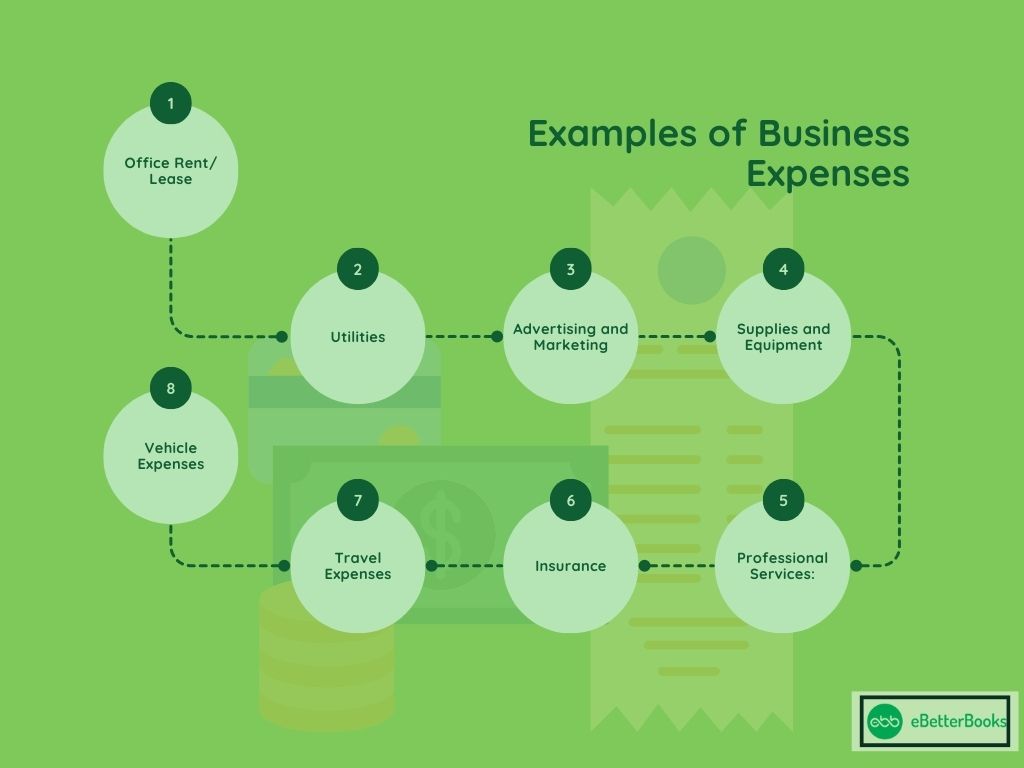
In tax accounting, accurately recognizing and classifying expenses is crucial to maintaining regulatory compliance and optimizing deductions when relevant. Every small business owner, self–employed person, or gig worker should know the difference between business expenses and personal expenses.
The income statement should be made after knowing which expenses belong to the business. Recording business expenses leads to lower taxable income and reduces the amount of tax you owe.
Business expenses refer to those expenses that are incurred as a part of the business’s operations.
Business expenses are the costs incurred during the business’s day-to-day operation, such as space rent, personnel wages, and equipment expenditures.
Section 162 of the Internal Revenue Code allows businesses to record any ordinary and necessary expenses.
Ordinary means the expense must be common in your industry, whereas Necessary means the expense must benefit your business.
Business expenses, such as certain legal fees, equipment rentals, employee education and training expenses, and advertising and marketing, are tax-deductible.
Here are common examples of business expenses:
Personal expenses refer to those expenses that are not related to the business and are entirely for personal use.
Personal expenses are the costs associated with meeting one’s requirements, such as groceries, mortgage payments, or personal auto upkeep.
Personal expenses are not tax-deductible, such as car payments, home office expenses, or meals and entertainment.
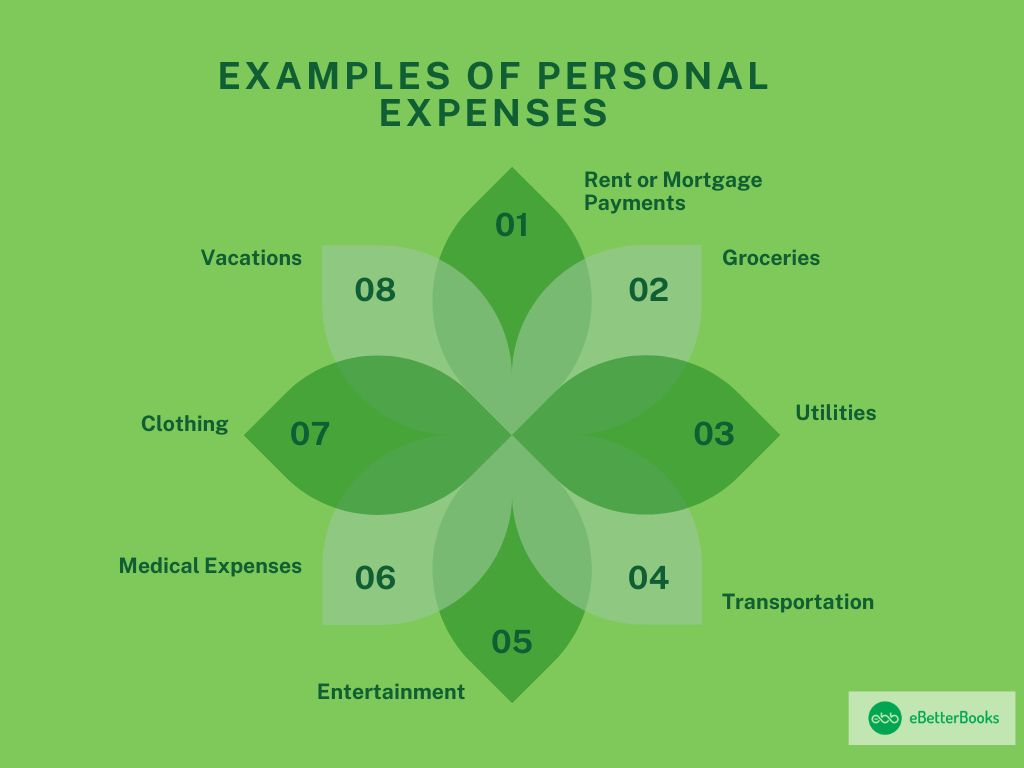
Here are some common examples of personal expenses:
Below is the difference in tabular form:
| Basis | Business Expenses | Personal Expenses |
| Purpose | Directly related to business operations and revenue generation | Related to maintaining personal lifestyle and well-being |
| Tax Deductibility | Generally tax-deductible | Not tax-deductible |
| Record Keeping | It requires detailed documentation like receipts, invoices, etc., for taxes. | There is no requirement for a tax deduction, but it is useful for budgeting. |
| Regulatory Requirement | Required for accurate business financial reporting | There is no regulatory requirement; it is purely personal tracking. |
IRS gives clear-cut guidelines to enable the difference between business and personal expenses.
Below are the key IRS principles:
Common deductible business expenses include:
Economic Justification: The IRS continues to remind the public that the law does not allow for the use of owned property for personal purposes to be claimed on tax returns.
Some specific distinctions include:
Commingling Funds: According to the IRS, business and personal funds must not be mixed. The blurring of an owner’s business and personal expenditures complicates record keeping for business expenditures and winds up attracting audits. It is advisable to maintain business and personal accounts as well as cards so that the two work independently of each other.
Mixed-Use Expenses: Some expenses may involve some level of mixed-use, either partly or wholly, between personal and business expenses, such as car or home expenditures. The IRS needs a clear documentation procedure and a rational technique for apportioning the business part of the expenses. For example, Cell Phone: A phone used for personal and business calls, only the business part must be computed, and only that part can be claimed.
The IRS always insists that only expenses that can be linked to the business and its operations should be claimed under business expenses. It would lead to penalties or audits if the expenses incurred are considered personal expenses, and then they are eligible for consideration under the personal expenditure account. For further information about this topic, kindly read the IRS Publication 535 (Business Expenses) or see a tax accountant.
It is very important to keep separate accounts for your business and personal expenses. Recording taxes becomes easy if the expenses are already recorded separately.
Every business owner should use a business bank account and credit card for all business expenses. This helps maintain clarity while recording the transactions.
If you are confused about which expense should be recorded in:
Employers who provide group health insurance to their staff members may deduct the cost of qualified medical services from their taxes. Small businesses need to insure more people in order to be eligible for group coverage.
The Health Insurance Deduction, which allows self-employed individuals to write off the expense of qualified health plans for themselves and their families, is supported by the IRS.
Travel expenses are handled differently than vehicle travel. When you use your car for work, you can write off a percentage of the cost. This covers tires, oil and gas changes, depreciation or lease payments, maintenance, tune-ups, insurance, and registration costs.
The mileage incurred for work and personal purposes must be separately computed, and journeys from your residence to your place of business cannot be claimed as business-related mileage. There are two methods for allocating company expenses based on mileage.
You have two options:
When someone uses a portion of their house as an office, they incur home business expenses. When you utilize the business portion of your house completely and frequently for your trade, you can deduct your home office. You can also use a separate building that isn’t a part of your house as your home office.
A portion of your mortgage interest, utilities, insurance, maintenance, and depreciation may be deductible as business expenses.
The IRS has established its hobby loss rules in IRC Section 183, which are designed to stop taxpayers from claiming business losses for activities that are primarily recreational and nonprofit.
If the IRS considers your hobby as a primary recreational activity, then the income it generates is taxable. However, if the IRS considers your hobby a business, the net loss would be deductible against other income, similar to any other net business loss.
Below are a few examples that will help you understand why it is important to separate business and personal expenses:
To Identify whether an expense is business or personal, consider the following key factors:
By assessing these factors, you can mark up your expenses, which in turn helps you group your expenses into the right categories.
Here are some additional tips for better management of business and personal expenses:
It is relevant to separate the business and personal expenses to ensure proper appropriation of monies and tax compliance. Business expenses, on the other hand, are costs incurred to generate sales, while on the other end, personal expenses are costs incurred for personal benefits. Consequently, proper classification of expenses optimizes deductions, whereas wrong reporting is unfavourable.
Some of the approaches include keeping expense accounts separate, conducting frequent evaluations, and use of other tools in accounting. Knowing these differences helps in responsible borrowing and thus in the success and economic stability of the people and establishments of the society.
No, because it causes tax and legal problems and puts a business in a situation where it may be audited. Always keep them separate.
Follow the steps below:
This is true for tracked shared expenses such as home office or rent. Divide them equally according to the respective proportion.
It helps to file correct taxes, not end up in legal trouble, manage finances easily, and safeguard properties.
A business account is one that is opened under the name of a business and is used for only business transactions. A personal account is an account that is opened by one person for their near-exclusive use.